A Belgian start-up focused on the development of next-generation mitral valve technologies
The Mitral Vortex
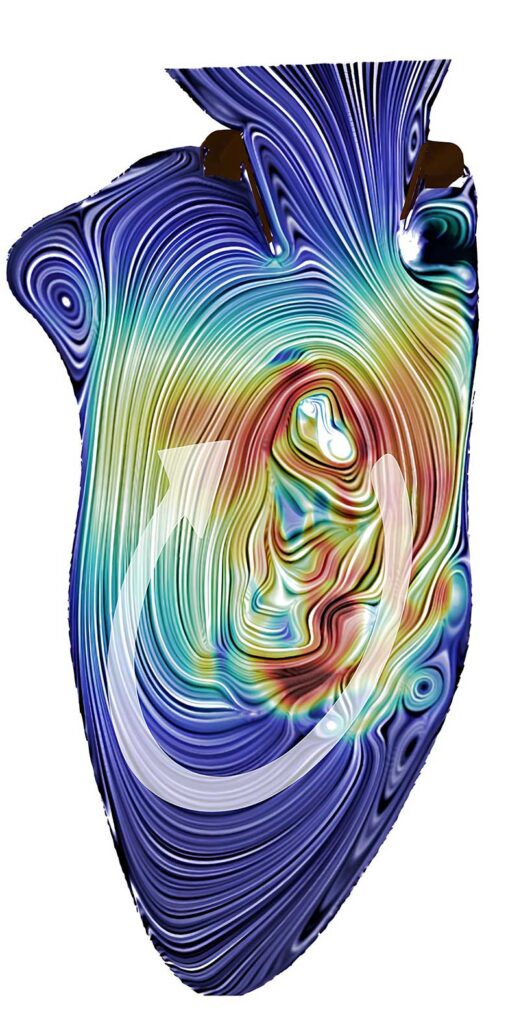
The mitral valve functions as a dynamically coupled structure. Its asymmetric leaflets and sub-valvular apparatus generate a physiological left ventricular (LV) vortex during diastole.
The Vortex represents a critical functional component rather than simple flow. Restoring this mechanism after mitral valve surgery is fundamental for maintaining cardiac self-cleaning and energy conservation.
The vortex enhances ejection efficiency and minimizes flow stagnation, which is a principal contributor to prevent thrombus formation and anticoagulation dependence.
The vortex increases cardiac output, reduces energy consumption, and promotes favorable ventricular remodeling over time.
Restoring physiological ventricular mechanics, specifically the vortex, may be critical to improve surgical outcomes and post-operative recovery.
A Fundamental Misconception
“For more than six decades, mitral valve replacement has followed a flawed anatomical premise: treating the mitral valve as if it were a second aortic valve. The two are fundamentally distinct.
The mitral valve’s asymmetric leaflets and sub-valvular apparatus exist to generate a left-ventricular Vortex — not as a by-product, but as the core mechanism that conserves energy and enables efficient diastolic filling and systolic ejection.
Conventional mitral prostheses abolish this mechanism, forcing the left ventricle to function under non-physiological flow conditions“.
Mohammad Sarraf, MD
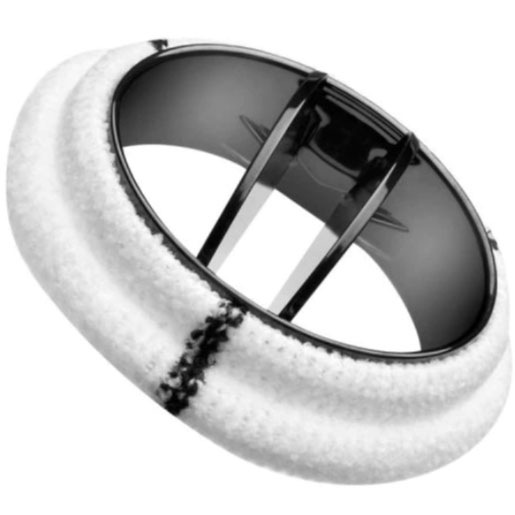
Conventional mechanical mitral valve prostheses are based on symmetric, round aortic prosthesis design. When implanted in mitral position, these “aortic-like” prostheses generate a geometric mismatch that disrupts physiological flow trajectories, increases shear regions, and predisposes to stasis-related complications.
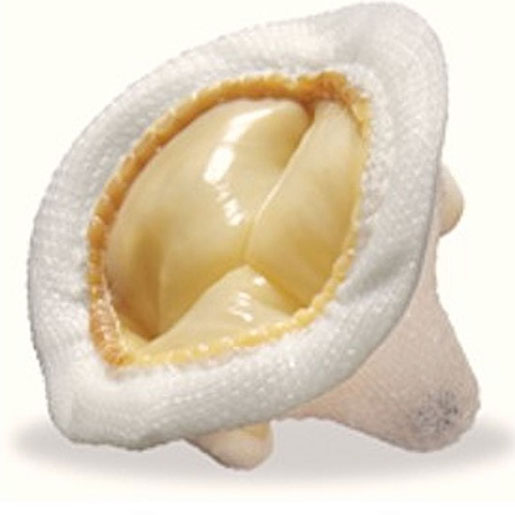
Biological made from soft animal tissue (porcine or bovine).
No anticoagulant therapy → better QoL
Durability ± 10 year → redo surgery → patient age > 65
Mechanical made from rigid metal alloy.
Anticoagulant therapy → worse QoL
No durability limits → no redo surgery → patient age < 65
Vortica
MITHRALICA is developing VORTICA, a next-generation physiological mechanical mitral valve prosthesis.
VORTICA differs fundamentally from existing devices, as it is designed based on the first principles of cardiac fluid dynamics, rather than adaptations of traditional prosthetic designs developed half century ago.
Accordingly, VORTICA should regarded not as a conventional valve replacement, but as a re-engineered intracardiac flow system intended to preserve the heart’s natural fluid dynamics and energetic efficiency.
Mythralica’s mission is to reinvent mitral flow dynamics for the benefit of millions of patients.
The company aims to introduce a next-generation mechanical mitral valve concept that enhances long-term patient outcomes by replicating the heart’s native structure-function relationship.
VORTICA is engineered to re-establish native vortex dynamics, restoring the heart’s intrinsic fluid-mechanical efficiency rather than requiring the ventricle to adapt to non-physiologic flow.